
This post is sponsored by Flamingo Auto Transport.

There is increasing pressure on the US transportation sector to lower emissions, increase fuel economy, and implement more environmentally friendly operating procedures. Although talks concerning the influence on the environment are frequently dominated by passenger cars, the auto transport industry is also going through major changes. Auto transport businesses are gradually implementing eco-friendly methods that lower waste, fuel consumption, and carbon emissions, from cleaner transportation technologies to smarter route planning.
Sustainability in auto transport is evolving from a marketing fad for car owners, dealerships, auction houses, and logistics experts. It is becoming more closely linked to customer expectations, regulatory compliance, and operational efficiency. Transportation companies are investing in greener solutions in response to modern consumers’ increased awareness of how vehicles and goods are transported around the country.
Diesel-powered carrier trucks that travel long interstate routes have historically been a major part of the auto transport industry. Naturally, these processes utilize a lot of fuel and increase greenhouse gas emissions. However, the sector is being forced to adopt more intelligent and ecologically conscious methods due to government regulations, rising fuel prices, and technological advancements.
Why Sustainability Matters in Auto Transport
One of the biggest causes of greenhouse gas emissions in the US is still transportation. Transportation is the largest contributor among economic sectors, accounting for around 28% of all greenhouse gas emissions in the United States, according to the U.S. Environmental Protection Agency (EPA).
Due to their lengthy travel distances and frequent continuous operation, heavy-duty vehicles, particularly vehicle carriers, account for a sizable portion of these emissions. Because of this, even modest increases in fuel efficiency can have a significant positive impact on the environment.
At the same time, there is growing pressure on companies in the logistics and automotive industries to lessen their environmental impact. Vehicle transportation is one of the supply chains that auto manufacturers, dealerships, and fleet operators are implementing sustainability targets for.
The change is also being influenced by consumers. Nowadays, a lot of consumers favor businesses that practice environmental responsibility. Auto transport companies are being encouraged by this increased awareness to implement more environmentally friendly practices in order to cut expenses and maintain their competitiveness.
The Rise of Fuel-Efficient Carrier Trucks
The use of more fuel-efficient carrier trucks is one of the most significant developments in environmentally friendly auto transportation.
Improved aerodynamics, lighter materials, and cutting-edge engine technologies are features of contemporary vehicle transporters that contribute to lower fuel consumption. Newer trucks can carry the same number of cars with far better mileage than earlier carriers.
Truck manufacturers have introduced features such as:
- Aerodynamic side skirts
- Low-rolling-resistance tires
- Idle reduction systems
- Automatic engine shutoff technology
- Lightweight aluminum trailers
- Advanced fuel injection systems
These improvements increase operational efficiency while lowering overall fuel consumption. Reduced fuel usage lowers carbon dioxide emissions while simultaneously saving transportation firms money.
According to the U.S. Department of Energy, aerodynamic upgrades alone can increase heavy-duty truck fuel efficiency by over 10% when driving on highways. These savings become significant for long-distance auto transport firms that travel thousands of miles per week.
The National Highway Traffic Safety Administration and the EPA have set higher federal emissions rules, and many transportation corporations are replacing their outdated fleets with newer models.
Route Optimization and Smart Logistics
Auto transportation is becoming more sustainable, thanks in large part to technology. Carriers may create more effective routes, cut down on empty miles, and limit fuel waste with the help of sophisticated route optimization tools.
Vehicle transport routes used to be mostly dependent on dispatcher experience and manual planning. These days, real-time analysis of delivery timetables, weather patterns, fuel prices, and traffic situations is possible thanks to artificial intelligence and logistics software.
Smarter route planning helps companies:
- Reduce unnecessary mileage
- Avoid congested traffic areas
- Minimize idling time
- Consolidate shipments more efficiently
- Improve trailer load balancing
It is particularly crucial to reduce “deadhead miles,” or the number of trips in which carriers use empty trailers. Without making any money, empty travel produces pollutants and wastes fuel. Transport companies can minimize their environmental impact and optimize trailer capacity by arranging pickups and deliveries more effectively.
Smart transportation technology can greatly increase freight efficiency while reducing fuel consumption and emissions, according to the U.S. Department of Transportation Intelligent Transportation Systems Program.
Additionally, digital logistics solutions are assisting transport providers in better coordinating client deliveries, auction transportation, and dealership shipments. There are fewer half-loaded trailers on the road due to better scheduling. Companies such as Flamingo Auto Transport are using modern logistics planning and consolidated shipping strategies to reduce empty miles while improving delivery efficiency.
Increased Use of Multi-Car Shipping
Using multi-car carriers is one of the most eco-friendly components of auto transportation.
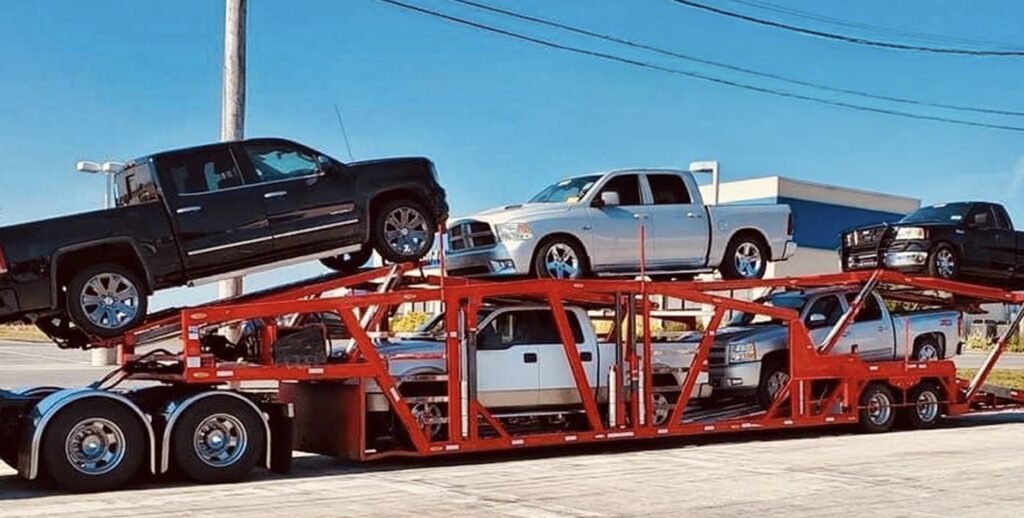
Compared to driving each vehicle separately over long distances, shipping several vehicles on a single trailer significantly lowers emissions per vehicle. Seven to ten automobiles can be transported simultaneously by a typical open carrier, while certain specialist carriers are capable of carrying even more.
This consolidation creates several environmental benefits:
- Fewer total vehicles on the highways
- Lower fuel consumption per car shipped
- Reduced tire and road wear
- Lower overall carbon emissions
For instance, one truck carrying eight cars uses a lot less gasoline overall than eight different drivers driving eight cars separately over the same trip.
To lower transportation-related emissions throughout their operations, many dealerships and auto auctions are depending more and more on consolidated shipping techniques. This strategy is in line with more general sustainability programs across the automobile sector.
Because effective load consolidation helps keep shipping costs stable despite rising fuel prices, consumers also gain indirectly.
Although diesel remains the dominant fuel source in heavy-duty trucking, alternative fuel adoption is gradually expanding within the auto transport sector.
Some transport companies are beginning to experiment with cleaner fuel technologies, including:
- Renewable diesel
- Biodiesel blends
- Compressed natural gas (CNG)
- Liquefied natural gas (LNG)
- Hydrogen fuel cell technology
- Electric heavy-duty trucks
Because renewable diesel can frequently be used in current diesel engines without requiring significant modifications, it has attracted special attention. When compared to traditional petroleum diesel, renewable diesel can drastically lower lifecycle greenhouse gas emissions, according to the Alternative Fuels Data Center.
As battery technology advances, electric commercial trucks are also becoming more practical. Shorter regional routes may gradually switch to electric fleets in the upcoming years, even though fully electric long-haul auto carriers still have issues with range and charging infrastructure.
Large logistics firms and truck manufacturers are making significant investments in zero-emission vehicle technologies. It is anticipated that the use of cleaner energy sources in automobile transportation will increase as infrastructure grows and costs decrease.
Research aimed at lowering freight transportation emissions using cutting-edge fuel technology and environmentally friendly logistical techniques is still supported by the National Renewable Energy Laboratory (NREL).
Better Maintenance Practices Reduce Emissions
Although routine maintenance might not seem like a significant sustainability project, it is crucial for lessening the impact on the environment.
Inadequately maintained trucks produce greater pollution and use more gasoline. Preventative maintenance can increase fuel efficiency and prolong vehicle lifespan for auto transport firms.
Key maintenance practices include:
- Proper tire inflation
- Engine tuning
- Regular oil changes
- Brake system inspections
- Air filter replacement
- Emissions system monitoring
In heavy-duty trucks, even small problems like underinflated tires can drastically lower fuel efficiency.
Telematics technology is now used by contemporary fleet management systems to track the health of vehicles in real time. Before they become major problems, sensors can identify mechanical defects, excessive idling, and engine inefficiencies.
This proactive strategy lowers long-term operating costs, increases reliability, and minimizes fuel waste.
Digital Documentation and Paperless Operations
Digital transformation is another way vehicle transport companies are going green.
In the past, paper records such as bills of lading, inspection reports, invoices, dispatch sheets, and delivery confirmations were a major part of the car shipping process.
Today, many companies are transitioning to paperless systems using:
- Electronic bills of lading (eBOL)
- Mobile inspection apps
- Cloud-based logistics platforms
- Digital signatures
- Automated invoicing systems
Even though cutting back on paper use might not seem like much when compared to fuel emissions, it can nevertheless have a significant environmental impact on huge transportation networks.
By cutting down on administrative delays, lowering human error, and simplifying communication between drivers, dispatchers, dealerships, and customers, digital solutions help increase operational efficiency.
Electronic communication and real-time cargo tracking further cut down on pointless calls, redundant paperwork, and inefficiencies during the transportation process.
Eco-Friendly Practices at Auto Auctions and Dealerships
Carriers are not the only ones engaged in sustainability initiatives. Dealerships and auto auctions are increasingly collaborating with transportation companies that promote eco-friendly logistical methods.
Every month, thousands of car moves are frequently coordinated by large automotive marketplaces. Emissions from all of these industries can be greatly decreased with effective transportation planning.
Many dealerships now prioritize:
- Consolidated shipments
- Regional transportation hubs
- Reduced idle times
- Digital inventory management
- Route coordination with transport partners
Additionally, several auction houses are making investments in sustainability reporting programs, renewable energy systems, and infrastructure for electric charging.
Major automakers may choose to work with transportation companies that promote sustainable logistical practices as environmental reporting becomes increasingly widespread across industries.
Government Regulations Are Accelerating Change
Another important factor promoting sustainability in car transportation is environmental restrictions.
The Department of Transportation and the EPA are two federal organizations that are still enforcing more stringent emissions regulations for commercial vehicles. Cleaner technology and fleet upgrades are encouraged by these requirements.
Recent regulations have focused on:
- Reducing greenhouse gas emissions
- Improving fuel efficiency standards
- Lowering nitrogen oxide emissions
- Expanding clean transportation infrastructure
Aggressive clean trucking programs are being implemented in California and a number of other states, which could eventually have an impact on national transportation policies.
Although compliance may result in higher short-term costs for carriers, many sustainability improvements eventually boost operational effectiveness and lower fuel costs.
As consumers place a higher priority on sustainability when choosing vendors, businesses that proactively invest in greener technologies may also benefit.
The Growing Role of Electric Vehicle Transport
The auto transport sector is being impacted by the growth of electric cars (EVs) in a number of ways.
Transportation firms are adjusting to handle battery-powered vehicles safely and effectively as EV sales continue to rise nationwide. Specialized understanding is needed to transport EVs due to variables like:
- Battery weight
- Charging requirements
- High-voltage safety considerations
- Emergency response procedures
Adoption of EVs is also encouraging more extensive conversations about sustainability in the transportation sector.
Reducing supply chain emissions, including transportation-related carbon output, is frequently a top priority for automakers making electric vehicles. Transportation companies are under pressure to investigate more environmentally friendly logistics options.
As part of larger sustainability initiatives, some car transport businesses are also assessing solar-powered facility renovations, hybrid fleet operations, and electric support vehicles.
Carbon Offsetting and Sustainability Reporting
To lessen their environmental impact, an increasing number of logistics and transportation businesses are taking part in carbon offset schemes.
Investing in environmental initiatives that offset greenhouse gas emissions from transportation-related activities is known as carbon offsetting. Examples include:
- Reforestation programs
- Renewable energy projects
- Methane capture initiatives
- Conservation programs
Offsets can support more comprehensive sustainability efforts, but they are not a straight replacement for lowering emissions.
Furthermore, some bigger transportation companies are implementing sustainability reporting procedures that track environmental performance measures, fuel usage, and emissions reductions.
Businesses and consumers can have a better understanding of how transportation operations affect the environment through transparent reporting.
Sustainability reporting may become more prevalent in the automotive industry as environmental accountability gains importance across businesses.
Challenges Facing Green Auto Transport
The shift to more environmentally friendly automobile transportation still confronts some obstacles despite tremendous advancements.
Diesel fuel is still a major component of heavy-duty trucking infrastructure, and alternative technologies sometimes demand large financial outlays. For instance, there are still issues with electric commercial trucks that include:
- Charging infrastructure availability
- Battery range
- Payload capacity
- Upfront vehicle costs
The cost of compliance and fleet modifications may also be a financial strain for smaller transportation firms.
Additionally, there is a logistical complication due to the countrywide character of motor transport. On alternative energy cars, reliable fuelling and service infrastructure is still being developed on long interstate routes.
However, the sector is still being pushed toward greener alternatives by technical advancement and government backing.
The Future of Eco-Friendly Auto Transport
The future of auto transport will likely involve a combination of cleaner technologies, smarter logistics systems, and stricter environmental standards.
Several trends are expected to shape the industry over the next decade:
- Wider adoption of electric and hybrid commercial trucks
- Increased use of renewable fuels
- AI-powered logistics optimization
- Expanded emissions reporting requirements
- Greater investment in sustainable infrastructure
- Enhanced route efficiency through automation
By optimizing acceleration, braking, and highway driving patterns, autonomous driving technology may also increase fuel efficiency. In the meantime, consumer demand for eco-friendly shipping choices is probably going to keep rising.
Eco-friendly transportation methods may transition from competitive advantages to industry norms as sustainability is increasingly included in automotive supply chains.
Conclusion
The car transport sector in the United States is significantly moving toward sustainability. While fuel-intensive operations have long been the mainstay of traditional vehicle shipping, contemporary transportation businesses are progressively implementing greener technology and more intelligent logistical strategies that lessen their impact on the environment.
Preventative maintenance, alternative fuels, multi-car shipping, fuel-efficient vehicles, route planning software, and paperless processes are all contributing to the industry’s transformation. At the same time, the shift to greener transportation methods is being accelerated by government laws, greater consumer awareness, and rising fuel prices.
The industry’s path is becoming more apparent, despite ongoing hurdles, especially in relation to infrastructure and technological expenses. Sustainability is now seen as a crucial component of long-term operational effectiveness and ethical business practices rather than an optional endeavor.
Understanding these changing tendencies can assist automobile owners, dealerships, auction houses, and logistics experts in making more intelligent transportation choices while advancing more general environmental objectives.
This post is sponsored by Flamingo Auto Transport.